Top 10 BMI Myths You Should Stop Believing
Body Mass Index (BMI) is one of the most commonly discussed health measurements worldwide. Doctors, fitness experts, and public health organizations often use BMI to assess whether a person’s weight falls within a healthy range.
However, despite its widespread use, many misunderstandings and BMI myths continue to circulate.
Believing inaccurate information about BMI can lead to confusion about health, weight management, and body composition.
Below, I will break down the most common BMI misconceptions and explain the real scientific truth behind them.
Are Most BMI Myths True?
No. While BMI has limitations, it remains a useful screening tool for assessing weight-related health risks. Understanding the facts helps you use BMI more effectively instead of dismissing it completely.
Myth 1: BMI Measures Body Fat Directly
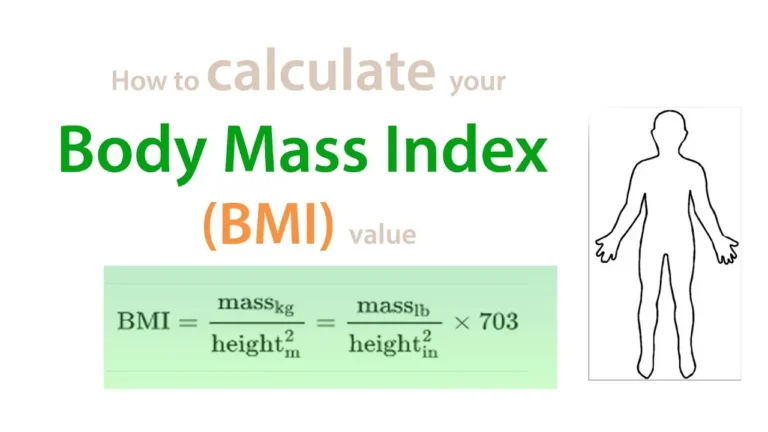
One of the biggest misconceptions is that BMI directly calculates body fat percentage. In reality, BMI only uses height and weight to estimate weight status.
The Truth
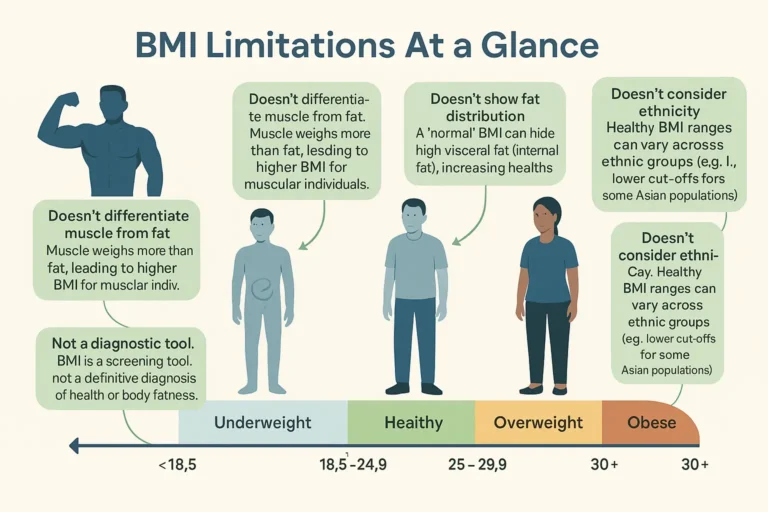
BMI provides a general indication of potential health risk but does not measure fat distribution or muscle mass. This is why healthcare providers often combine BMI with other assessments such as waist circumference or body composition testing.
To understand the difference more clearly, read BMI vs Body Fat Percentage.
Myth 2: BMI Is Completely Useless
Some people believe BMI has no value because it does not account for muscle mass or fitness level.
The Truth
BMI is still useful as a population-level screening tool. Public health agencies use BMI data to track obesity trends, design prevention programs, and guide healthcare policies.
Although it may not be perfect for individuals with unique body compositions, BMI provides helpful insights when interpreted correctly.
Myth 3: A Normal BMI Means Perfect Health
Many individuals assume that being within the normal BMI range automatically guarantees good health.
The Truth
Health depends on multiple factors, including:
- nutrition quality
- physical activity
- sleep patterns
- stress levels
- metabolic health markers
Someone can have a normal BMI yet still experience conditions such as high cholesterol or poor cardiovascular fitness.
You can see why body mass index is important for health.
Myth 4: Only Overweight People Need to Care About BMI
Another common misunderstanding is that BMI only matters if someone is overweight or obese.
The Truth
BMI can also highlight risks related to being underweight. Low BMI levels may be associated with nutritional deficiencies, weakened immunity, or reduced muscle strength.
Understanding all BMI categories helps individuals take preventive steps toward balanced health.
Myth 5: BMI Applies Equally to Everyone
Many people assume BMI works the same for all populations.
The Truth
BMI interpretation can vary depending on:
- ethnicity
- gender
- age
- muscle mass
For example, certain ethnic groups may face metabolic risks at lower BMI levels, while athletes may have higher BMI due to increased muscle mass.
Explore these variations in BMI for different populations.
Myth 6: BMI Is the Only Measurement That Matters
Some believe BMI alone determines overall health status.
The Truth
Healthcare professionals use a combination of indicators such as:
- blood pressure
- cholesterol levels
- glucose metabolism
- waist circumference
BMI serves as an initial screening step rather than a complete diagnostic tool.
Myth 7: BMI Changes Rapidly With Short-Term Dieting
People often expect quick BMI changes after starting a new diet or workout routine.
The Truth
BMI typically changes gradually because sustainable weight management involves long-term lifestyle adjustments. Sudden fluctuations are often temporary and may reflect water weight rather than fat loss.
If you want practical strategies for gradual improvement, explore exercises to reduce BMI.
Myth 8: High BMI Always Means Poor Fitness
A common belief is that individuals with higher BMI cannot be physically fit.
The Truth
Some individuals with higher BMI maintain strong cardiovascular endurance and muscle strength. Fitness level depends on physical activity, body composition, and metabolic health rather than weight alone.
This myth highlights the importance of evaluating multiple health indicators.
Myth 9: BMI Categories Are Arbitrary
Some critics claim BMI ranges were randomly created without scientific basis.
The Truth
BMI categories are based on large-scale epidemiological studies linking weight ranges to disease risk patterns. Organizations such as the CDC and World Health Organization use these classifications to guide public health recommendations.
For a deeper look at clinical applications, read how BMI is used in U.S. health guidelines.
Myth 10: You Should Focus Only on BMI to Lose Weight
Weight loss strategies often emphasize achieving a specific BMI number.
The Truth
Healthy weight management involves building sustainable habits such as:
- balanced eating patterns
- regular physical activity
- adequate sleep
- stress management
Focusing solely on BMI may overlook improvements in muscle strength, energy levels, and overall wellbeing.
Why Understanding BMI Truth Matters
Clearing up BMI misconceptions helps individuals adopt realistic health goals. Instead of viewing BMI as a rigid label, it should be seen as a helpful guide within a broader wellness framework.
Accurate knowledge allows people to:
- track long-term health trends
- make informed lifestyle choices
- avoid extreme dieting behaviors
- maintain balanced body composition
Understanding the limitations and benefits of BMI leads to smarter decision-making.
FAQs
Is BMI outdated or no longer relevant?
BMI is still widely used in healthcare and research, although experts recommend combining it with other measurements.
Can BMI be misleading for athletes?
Yes. High muscle mass may increase BMI without indicating excess body fat.
Should I ignore BMI if I feel healthy?
It is better to use BMI as one of several health indicators rather than ignoring it completely.
Does BMI account for fat distribution?
No. BMI does not show where fat is stored in the body.
How often should I check my BMI?
Checking BMI periodically can help monitor long-term weight trends.
Summary
Understanding the truth behind BMI myths allows individuals to approach weight management with clarity and confidence. While BMI has limitations, it remains a valuable starting point for identifying potential health risks and guiding preventive care.
A balanced perspective that includes nutrition, fitness, mental wellbeing, and medical guidance offers the most reliable path toward long-term health.
For continued learning, you can explore:
👉 Normal BMI Range Explained
👉 BMI and Obesity Connection