How to Calculate BMI
Body Mass Index (BMI) is one of the simplest methods used worldwide to estimate whether a person’s weight is appropriate for their height.
It provides a quick numerical value that helps categorize individuals into weight groups such as underweight, normal weight, overweight, or obesity.
Understanding how BMI is calculated can help you track weight trends, set realistic health goals, and identify potential lifestyle improvements.
How Is BMI Calculated?
BMI is calculated by dividing a person’s weight by the square of their height. In the metric system, the formula is:
Metric Formula
BMI = weight (kg) ÷ height² (m²)
Example: If you weigh 70 kg and your height is 1.75 m, your BMI is 22.9.
Imperial Formula
BMI = [weight (lb) ÷ height² (in²)] × 703
Example: If you weigh 154 lb and your height is 5 ft 9 in, your BMI is about 22.7.
To avoid manual calculations, many people prefer using an online BMI calculator tool.
This simple weight-to-height ratio helps estimate whether body weight falls within a healthy range.
The Concept Behind BMI Calculation
BMI calculation is based on the idea that body weight relative to height can indicate potential health risks. Taller individuals naturally weigh more, so BMI uses height squared in the formula to adjust for this difference.
The result is a standardized measurement that can be used across large populations. Health organizations use BMI to monitor obesity trends, design preventive health programs, and guide clinical assessments.
While BMI does not directly measure body fat percentage, it is still widely used because of its convenience and consistency.
BMI Calculation Formula (Metric System)
The metric formula is commonly used in most countries.
Step-by-Step Calculation
- Measure your weight in kilograms.
- Measure your height in meters.
- Multiply your height by itself (square it).
- Divide your weight by the squared height.
Example Calculation
- Weight = 68 kg
- Height = 1.70 m
Height squared = 1.70 × 1.70 = 2.89
BMI = 68 ÷ 2.89 = 23.5
This BMI falls within the normal weight range according to standard BMI charts.
BMI Calculation Formula (Imperial System)
In countries that use pounds and inches, the formula includes a conversion factor.
Step-by-Step Calculation
- Measure your weight in pounds.
- Measure your height in inches.
- Square your height value.
- Multiply your weight by 703.
- Divide the result by the squared height.
Example Calculation
- Weight = 165 lbs
- Height = 68 inches
Height squared = 68 × 68 = 4624
BMI = (165 × 703) ÷ 4624
BMI = 115,995 ÷ 4624
BMI ≈ 25.1
This BMI indicates the person is slightly above the normal weight category.
For faster results, many people prefer using a digital tool instead of manual calculations.
👉 Try our online BMI calculator for accurate instant calculations.
How BMI Charts Help Interpret Results
After calculating BMI, the next step is understanding what the number means. BMI charts classify results into categories that reflect potential health risk levels.
Standard BMI Categories
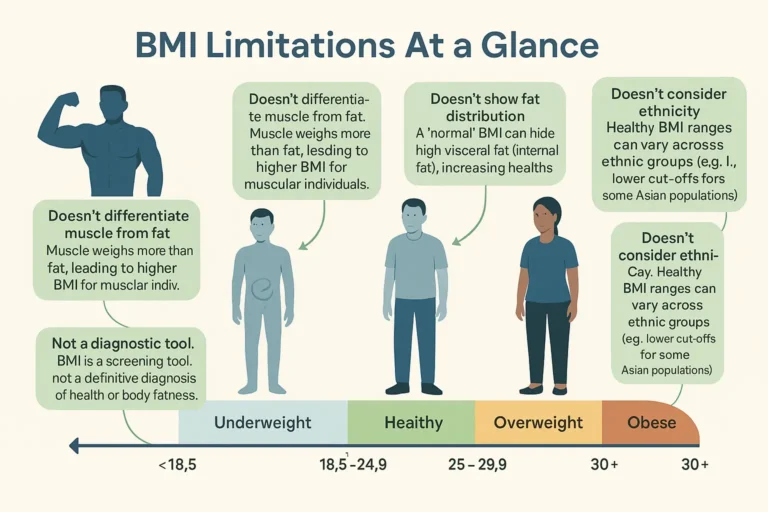
| BMI Value | Weight Category |
| Below 18.5 | Underweight |
| 18.5 – 24.9 | Normal weight |
| 25 – 29.9 | Overweight |
| 30 and above | Obesity |
These ranges are widely used by healthcare providers and public health organizations.
To learn more about maintaining a healthy range, explore normal BMI lifestyle tips.
Why Height Squared Is Used in the Formula
Many people wonder why BMI calculation uses height squared instead of a simple height adjustment.
The reason is mathematical scaling. As height increases, body volume and mass generally increase at a different rate than linear height measurements. Squaring height helps create a more balanced comparison across individuals of different sizes.
This approach allows BMI to serve as a population-level screening tool rather than an exact measurement of body composition.
Common Mistakes When Calculating BMI
Even though BMI calculation is simple, errors can occur if measurements are inaccurate.
1. Using Incorrect Units
Mixing metric and imperial units without proper conversion can lead to incorrect BMI values.
2. Rounding Height or Weight Too Much
Small measurement errors can change BMI classification, especially near category boundaries.
3. Measuring Height with Shoes On
This can slightly increase height readings and underestimate BMI.
4. Ignoring Recent Weight Fluctuations
Temporary weight changes due to hydration or digestion can affect BMI calculations.
How Often Should You Calculate BMI?
BMI does not need daily monitoring. Checking once every few weeks or months is usually sufficient for tracking long-term trends.
Frequent measurements can create unnecessary stress because short-term weight changes do not always reflect meaningful body fat changes.
For ongoing progress tracking, combine BMI calculation with waist measurements and lifestyle evaluation.
Limitations of BMI Calculation
Although BMI formula provides useful insight, it has certain limitations.
- It does not distinguish between muscle and fat mass.
- It may not accurately reflect health risks for athletes or very muscular individuals.
- It may require adjustment for older adults or certain ethnic populations.
For deeper understanding, read limitations of BMI explained.
BMI Calculation for Different Age Groups
BMI calculation method remains the same for adults, but interpretation differs for children and teenagers. Pediatric BMI uses percentiles based on age and gender growth charts.
Older adults may also have slightly different healthy BMI considerations due to muscle loss associated with aging.
👉 Learn more in BMI for different populations.
Practical Tips for Accurate BMI Measurement
- Measure weight at the same time of day
- Use a reliable weighing scale
- Stand straight against a wall for height measurement
- Avoid heavy clothing during measurement
- Track trends rather than single readings
Using consistent measurement methods improves the reliability of BMI calculations over time.
How BMI Calculation Supports Weight Management
BMI calculation can help guide healthy lifestyle decisions by providing a general indicator of weight status. Individuals in higher BMI categories may benefit from structured weight management strategies involving balanced nutrition and regular physical activity.
👉 Related reading: best exercises for weight loss
👉 Related reading: best foods for fat loss
These supportive lifestyle approaches can gradually improve BMI and overall wellbeing.
FAQs
Can BMI be calculated without a calculator?
Yes, BMI can be calculated manually using the weight-to-height formula. However, digital calculators provide quicker and more accurate results.
Is BMI calculation different for men and women?
The formula remains the same, but body composition differences may influence how BMI reflects health risk.
Why does BMI use height squared?
Height squared helps standardize weight comparisons across individuals of different body sizes.
Can BMI change quickly?
Short-term fluctuations can occur due to water retention or digestion, but meaningful BMI changes usually take consistent lifestyle adjustments.
Is BMI enough to assess health?
BMI is a useful screening tool but should be combined with other factors like waist circumference, fitness level, and medical history.
Final Thoughts
Knowing how BMI is calculated helps you better understand your weight status and track long-term health progress. While the formula is simple, interpreting results correctly requires awareness of lifestyle factors, body composition, and overall wellbeing.
Using tools like our BMI calculator, exploring educational guides, and adopting balanced habits can support gradual improvements in weight management and health outcomes.